Can I Fast During Pregnancy in Ramadan?” The Question Every Expecting Mother Whispers in Silence
When Faith Meets Fear: A Gentle, Honest Guide for Mothers Torn Between Devotion and Their Baby’s Safety
Ramadan arrives with peace, reflection, and spiritual renewal. For many women, it is the most emotionally powerful time of the year. But if you are expecting, your heart may feel heavy instead of light.
You might be asking yourself quietly, can I fast during pregnancy in Ramadan without harming my baby?
Maybe you feel guilty even thinking about not fasting. Maybe family members are saying, “Women have fasted while pregnant for centuries.” Maybe you feel strong and healthy and wonder if you’re overthinking it.
Or maybe you’re exhausted, nauseous, dizzy and terrified of making the wrong choice.
This is not just about food and water. This is about faith, responsibility and the tiny life growing inside you.
Let’s walk through this honestly.
Quick information in this blog
Why Week 7 Feels So Intense And Why You’re Not Weak for Feeling This Way
Your Body at 7 Weeks: Subtle Changes That Feel Loud Inside
Missed Period Reality Check: Why It Still Feels Unreal
7 Weeks Pregnant Symptoms: What’s Normal vs What Needs Attention
Why Week 7 Triggers So Much Fear Even When Everything Is Normal
Your Baby at Week 7: A Tiny Architect at Work
Skin, Eyes & Facial Features: The Blueprint Is Being Drawn
Your Baby’s Brain at Week 7: A Developmental Explosion
Fatigue Isn’t Laziness: The Energy Cost of Organ Creation
Baby Growth Snapshot: Week 6 vs Week 7
What to Eat at 7 Weeks Pregnant When Food Feels Like the Enemy
Nausea Survival Mode: What Actually Helps Beyond Ginger Tea
Weight Changes at Week 7: Why the Scale Lies
Brief details about this specific point.
What Not to Do at Week 7 Even If You Feel “Fine”
Brief details about this specific point.
Final thought
Brief details about this specific point.
The Emotional Tug-of-War: Devotion vs. Protection
Many women struggle silently with pregnancy and Ramadan fasting. You want to participate fully. You want the reward. You want the spiritual connection.
But pregnancy changes everything.
Your body is not just yours anymore. Blood volume increases. Your metabolism shifts. Your baby depends entirely on you for oxygen, hydration and glucose.
According to the World Health Organization (WHO), adequate nutrition during pregnancy directly impacts fetal growth, birth weight and long term health outcomes. The CDC also emphasizes stable blood sugar and hydration as critical during pregnancy.
So when you ask, can I fast during pregnancy in Ramadan, you are not being weak. You are being responsible.
What Islam Actually Says About Pregnant Women and Fasting
Let’s clear the religious confusion.
Islam gives clear compassion here.
The Qur’an explicitly provides an Islamic exemption for pregnancy fasting if fasting may harm the mother or baby. Scholars agree that if there is fear of harm, a pregnant woman may skip fasting and either make up fasts after pregnancy or give fidya for missed fasts, depending on her situation.
The Qur’anic principle of “Allah intends ease for you, not hardship” forms the foundation of this exemption.
Islam does not ask you to endanger your child.
If you are pregnant and fasting in Islam, the intention matters. Protection of life is a core principle.
Faith is not about self harm. It is about wisdom.
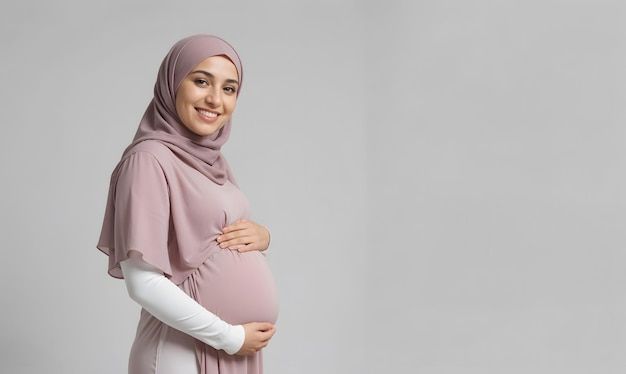
What Happens to Your Body When You Fast While Pregnant?
When you are fasting while pregnant, your body shifts into energy conservation mode.
After 8 to 10 hours without food, blood glucose levels drop. During pregnancy, glucose is the baby’s primary energy source. If levels drop too low, your body produces ketones. Some studies suggest prolonged ketone exposure may affect fetal development, although research remains mixed.
Now consider dehydration.
Dehydration in pregnancy increases the risk of:
- Headaches
- Low amniotic fluid
- Urinary infections
- Preterm contractions
The CDC highlights hydration as essential to prevent complications. Ramadan fasting in hot climates or long summer days can stretch beyond 14 hours without water.
So when you ask, can I fast during pregnancy in Ramadan, the real question becomes: can your body tolerate extended metabolic stress?


First Trimester Fasting: The Most Vulnerable Stage
The first trimester is delicate.
This is when organs form. Neural tubes close. Placenta develops. Many women experience nausea and vomiting, making calorie intake already difficult.
First trimester fasting may increase dizziness and low blood sugar during pregnancy. If you already struggle with morning sickness, fasting can worsen fatigue and dehydration.
This is not about strength. It is about biology.
Second Trimester Fasting: A “Golden Period” That Still Needs Care
The second trimester is often called the “golden period” of pregnancy. Nausea eases, energy improves and some women feel more confident asking, can I fast during pregnancy in Ramadan.
Physiologically, this stage is more stable: the placenta is fully formed, miscarriage risk drops and blood sugar regulation is easier. However, nutritional and hydration needs rise as the baby grows, especially for iron and fluids.
While many healthy women may tolerate fasting better now, prolonged hours or hot climates can still cause fatigue, dizziness or reduced oxygen delivery to the baby. Always monitor weight, fetal movement and overall wellbeing, and consult your healthcare provider before deciding.
Third Trimester Fasting: A Different Kind of Risk
In the third trimester, the baby grows rapidly. Calorie needs increase. Iron requirements peak.
Third trimester fasting may increase fatigue and the risk of uterine irritability due to dehydration.
Some observational studies have shown mixed outcomes. Many women fast without obvious complications. However, medical experts often advise individualized assessment rather than blanket permission.
So again, can I fast during pregna
What Research Actually Shows About Pregnancy and Ramadan Fasting
Studies on, is fasting safe during pregnancy show mixed results.
Some research finds no significant difference in birth weight when healthy women fast intermittently. Other studies suggest slight reductions in birth weight or increased maternal fatigue.
The WHO and global maternal health guidelines consistently emphasize adequate nutrition and hydration as non-negotiable for fetal health.
There is no universal answer.
Which means there is no universal guilt either.
Who Should Absolutely Avoid Fasting During Pregnancy?
You should strongly reconsider fasting if you have:
- Gestational diabetes
- History of miscarriage
- High blood pressure
- Anemia
- Twin pregnancy
- Poor fetal growth
- Severe vomiting
In these cases, the risks of fasting during pregnancy increase significantly.
Women with gestational diabetes face a particular challenge. Blood sugar instability during prolonged fasting can lead to hypoglycemia during the day and hyperglycemia after iftar. This fluctuation increases risks for both mother and baby.
Similarly, women with hypertension require consistent hydration to prevent blood pressure spikes. Dehydration thickens the blood slightly, which can increase strain on the cardiovascular system.
In these conditions, the conversation about can I fast during pregnancy in Ramadan shifts from preference to safety protocol.
Islamic jurisprudence supports exemption in all these conditions.
Comparison Table: Fasting vs. Not Fasting During Pregnancy
Factor | Fasting | Not Fasting |
Hydration | Risk of dehydration in pregnancy | Stable hydration |
Blood Sugar | Possible low blood sugar during pregnancy | Stable glucose |
Energy Levels | Increased fatigue | More stable energy |
Religious Obligation | Allowed but conditional | Permissible exemption |
Make-Up Required | No | Make up fasts after pregnancy or fidya for missed fasts |
The Emotional Weight No One Prepares Mothers to be for during Ramadan
Let’s talk about the emotional weight.
Some women feel judged for not fasting. Others judge themselves.
You might think, “Other women are fasting. Why can’t I?”
But every pregnancy is different. Every body is different.
When you ask can I fast during pregnancy in Ramadan, you are not failing spiritually. You are evaluating responsibly.
Your baby’s safety is an act of worship.
Community culture sometimes intensifies pressure. However, religious rulings do not operate on social comparison. Your neighbor’s pregnancy is not your pregnancy. Her stamina does not determine your safety.
When you understand that Islam acknowledges biological differences, you release unnecessary shame.
If You Choose to Fast: Smart Safety Strategies
If your doctor approves and you feel physically stable, you can reduce risk.
Focus on:
- High protein suhoor meals
- Complex carbohydrates
- Electrolyte rich fluids
- Avoiding excessive physical activity
- Monitoring dizziness
- Tracking fetal movement
Break your fast immediately if you feel faint, weak, or notice reduced movement.
Pregnancy and Ramadan fasting requires vigilance.
Divide your nighttime meals strategically. Avoid overeating at iftar, as rapid spikes in glucose can lead to crashes later. Include iron-rich foods and vitamin C sources to support absorption. Monitor urine color as a simple hydration indicator darker urine suggests dehydration.
Most importantly, schedule a mid-Ramadan medical check if you plan to fast consistently. Monitoring weight, blood pressure and fetal growth provides reassurance and reduces risk.
Final Thoughts: Faith Does Not Demand Harm
Lower insulin and inflammation improves ovulation quality. That is why PCOS and intermittent fasting sometimes improves cycle regularity.
It does not guarantee pregnancy. But it improves the metabolic environment for ovulation.
Conclusion: Ramzan Can Become Your Hormone Reset If Done Intelligently
Ramadan is about mercy.
Motherhood is about protection.
You are allowed to choose wisely.
If fasting harms you or your baby, exemption exists for a reason.
Your intention carries immense reward.
Is fasting safe during pregnancy if I feel fine?
Even if you feel well, consult your doctor. Some complications develop silently.
Can I fast for only a few days?
Yes. Many women fast shorter days or alternate days depending on strength.
What if I already started fasting and feel weak?
Break your fast. Your health comes first.
Do I have to pay fidya?
This depends on scholarly interpretation and your health situation.
Schedule
An Appointment
If you are in need of medical assistance, whether it be for a routine checkup or for a specific medical concern contact us.

Schedule
An Appointment
If you are in need of medical assistance, whether it be for a routine checkup or for a specific medical concern contact us.
Join Our Growing Online
Community
Stay connected with Dr. Rafiya Zahir and become part of an engaging community committed to women’s healthcare in Pakistan by joining us on various social media platforms.